Quick Answer

What This Page Answers

How DSCR loans work for rental property investors — what gets reviewed, what math is used, and whether your property's rental income can support the loan payment without personal income verification.

Best Fit

Investors with rental income that covers the P&I payment, DSCR ≥ 1.0

Main Requirements

20–25% down, 680+ credit, rental income ≥ monthly P&I, 6 mo. reserves

What Lenders Review

Appraisal rent schedule, property DSCR, credit, entity, reserves

Next Step → Run the DSCR calculator with your property numbers.

Real Example

Investor Scenario: DSCR Refinance on an Existing Rental

The Scenario

  • Single-family rental in Tampa, FL — appraised value $340,000
  • Current loan balance $210,000 — rate-and-term DSCR refinance
  • Monthly rent $2,600 — DSCR at new payment 1.31
  • New rate 6.875%, P&I ~$1,380/mo vs. old P&I $1,570/mo

What Made It Work

  • Strong DSCR at new payment — 1.31 comfortably above 1.0
  • 62% LTV — well within 75% max for DSCR cash-out programs
  • Borrower 720 credit, 3 other rentals in LLC, documented landlord
  • Rate improved by 0.625%, saving $190/mo in P&I

* This is a representative planning example. Your numbers, lender review, and program eligibility will vary.

What a DSCR Loan Is

Understanding DSCR Rental Property Financing

A DSCR loan — short for Debt Service Coverage Ratio loan — is a rental property financing option where the lender reviews the property's income-producing potential more heavily than the borrower's personal income. The central metric is the DSCR ratio, which compares the property's net operating income to its total debt obligation.

Rather than relying primarily on tax returns or W-2s, DSCR lenders evaluate whether the rental property can generate enough cash flow to cover the mortgage payment — and then some. This approach has made DSCR loans a practical path for rental property investors who want to scale without hitting traditional income documentation limits.

It is important to understand that DSCR lending is not a standardized product. Every lender sets its own DSCR minimum, credit thresholds, reserve requirements, property type restrictions, and documentation standards. The scenario review process helps investors understand which DSCR path may be available before they commit time and resources.
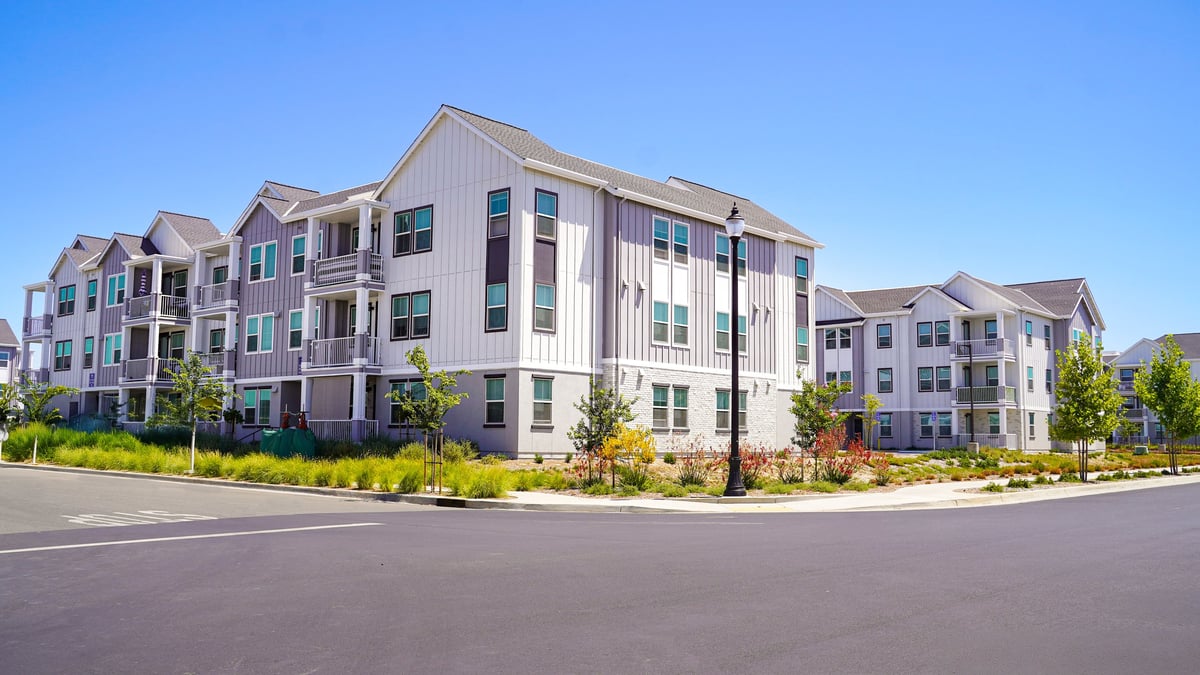
Modern multi-unit rental apartment building, ideal for DSCR investment property financing

DSCR Financing

Rental income · Cash flow · Property value

How DSCR Is Estimated

The DSCR Calculation

Simplified Formula

Net Operating Income ÷ Total Debt Service

Net Operating Income (NOI) is typically estimated using the property's gross rental income minus operating expenses like property taxes, insurance, HOA fees, and maintenance reserves. Total Debt Service is the annual principal and interest plus any required escrows.

Example

Monthly Rent$2,500
Annual Gross Rent$30,000
Less Expenses (~35%)-$10,500
Net Operating Income$19,500
Annual Debt Service$16,200
DSCR1.20

DSCR Dashboard

Monthly Rent

$2,500

Annual NOI

$19,500

Debt Service

$16,200

DSCR Ratio

1.20

DSCR Strength Adequate (≥1.0 threshold)

A DSCR of 1.20 means the property generates 20% more income than needed to cover the debt obligation. Most DSCR lenders look for a ratio of 1.00 or higher, though stronger ratios — 1.25 and above — may open access to more competitive terms.

The actual DSCR a lender calculates can differ from investor estimates because lenders use their own underwriting methodology.

The DSCR calculator provides a directional estimate. A full scenario review gives a more realistic picture with actual lender guidelines.

What Lenders Commonly Review

What DSCR Lenders Commonly Review

DSCR lending places more emphasis on the rental property's cash flow than traditional income documentation, but the review process is broader than a single ratio. Here is what lenders typically evaluate.

Rental Income & Market Rent

Lenders compare the lease or market rent to the property's debt obligation. An appraisal with a rent schedule is typically required.

DSCR Ratio

The ratio of net operating income to total debt service. Most lenders look for a minimum between 1.00 and 1.25 depending on the program.

Credit Profile

Credit scores and credit history are reviewed. Minimum credit score requirements vary by lender and program, and stronger credit may improve available terms.

Down Payment / Equity

Down payment requirements for purchases and equity thresholds for refinances are reviewed. Stronger LTV positions may improve available terms.

Reserves

Lenders may require 6 to 12 months of reserves — funds set aside to cover mortgage payments — depending on the program, property count, and investor profile.

Property Type & Appraisal

Single-family, condo, and 2–4 unit properties are common. Some lenders restrict non-warrantable condos, rural properties, or unique property types.

Borrower Factors

Borrower Factors That Still Matter

While DSCR loans emphasize property cash flow, borrower factors can still influence the review, available programs, and terms. Ignoring these factors can lead to surprises late in the process.

Credit Score and History

Most DSCR programs have a published minimum credit score. Falling below that threshold can limit program access. Recent credit events — such as foreclosure, bankruptcy, or significant late payments — may require a seasoning period before a DSCR loan is available. Stronger credit profiles may open access to more competitive pricing and higher leverage options.

Entity Structure

Many DSCR loans close in the name of an LLC or other entity. Lenders may require specific entity documentation, operating agreements, and EIN verification. The entity type and structure can affect program eligibility, so it is helpful to discuss entity setup early in the review.

Property Experience

Some DSCR lenders review the borrower's experience owning and managing rental property. First-time investors may face higher down payment requirements, lower LTV limits, or additional reserve requirements compared with experienced landlords. Experience is not a universal barrier, but it can shift the available loan path.

Number of Financed Properties

Lenders often cap the total number of financed properties an investor can hold, and DSCR programs are no exception. Portfolio investors approaching lender limits may need to explore alternative programs or adjust timing. Discussing the full property portfolio during the review helps identify potential roadblocks early.

Scenarios

DSCR Purchase, Refinance, and Cash-Out Scenarios

DSCR loans can be used for purchases, rate-and-term refinances, and cash-out refinances. Each scenario has its own review points.

DSCR Purchase

A DSCR purchase loan is used to acquire a rental property when the investor's goal is to qualify based primarily on the property's projected rental income rather than personal income. Lenders will review the purchase price, projected market rent, estimated expenses, and the resulting DSCR. The down payment, typically 20–25% or more, directly affects the loan amount and DSCR calculation.

Key review points: contract purchase price, market rent appraisal, estimated property taxes and insurance, HOA (if applicable), projected DSCR at closing, and borrower reserves.

DSCR Refinance (Rate-and-Term)

A rate-and-term DSCR refinance replaces the existing loan on a rental property to adjust the rate, term, or both. The goal is typically to improve cash flow, reduce monthly payments, or lock in more predictable terms. Lenders will review the current market rent, actual or projected expenses, and the new DSCR based on the proposed loan terms.

Key review points: current loan balance and terms, property value and equity position, current rent and lease status, estimated new DSCR, and break-even analysis on refinance costs.

DSCR Cash-Out Refinance

A DSCR cash-out refinance allows the investor to access equity in the rental property while still qualifying based primarily on rental income. Lenders will review the current value, existing loan balance, proposed new loan amount, and whether the post-cash-out DSCR still meets program minimums. Cash-out LTV limits are typically lower than purchase or rate-and-term LTV limits.

Key review points: current property value and loan balance, cash-out amount requested, post-cash-out LTV, projected DSCR after cash-out, use of proceeds, and whether the property has enough equity and cash flow to support the larger loan.

Property Types

Property Types for DSCR Loans

DSCR loans are available on a range of residential investment property types, but not every property fits every DSCR program. Property type can affect pricing, LTV, and program availability.

Single-Family Rental (SFR)

The most common DSCR property type. Widely eligible across most DSCR programs with predictable underwriting.

Condominiums

Eligible with many DSCR lenders, though non-warrantable condos — those that do not meet conventional guidelines — may have fewer program options. HOA dues are included in the expense calculation.

2–4 Unit Properties

Duplexes, triplexes, and fourplexes are eligible with many DSCR lenders. Multi-unit properties can strengthen DSCR when all units are rented, but vacancy in one unit can weaken the ratio.

Townhomes

Generally treated similarly to single-family properties by most DSCR lenders, though HOA dues factor into the expense calculation.

Rural properties, manufactured homes, properties under 750 square feet, and short-term rental properties may have fewer DSCR program options. Discuss the specific property type during the scenario review.

Have a 5–10 Unit Property?

Some DSCR lenders may review 5–8 unit small multifamily properties, and select programs may consider up to 10 units. Submit the rent roll, property value, estimated loan amount, and occupancy details for review.

Submit Scenario

Preparation

Documents and Numbers to Prepare

Having these items ready before a DSCR scenario review helps the process move more efficiently. Exact requirements vary by lender and program.

Property Address and Type

The subject property address, property type, and number of units.

Purchase Price or Estimated Value

Contract purchase price for acquisitions or estimated current market value for refinances.

Current or Projected Rent

Actual lease rent or a realistic estimate of market rent supported by comparable properties.

Loan Amount and Down Payment / Equity

Estimated loan amount, down payment percentage for purchases, or existing loan balance and desired cash-out for refinances.

Credit Score Estimate

A general understanding of credit standing — a recent pull is not required to begin the conversation.

Entity Documents (if applicable)

If the property is or will be held in an LLC or entity, have the entity name, structure, and operating agreement available.

Mistakes

DSCR Mistakes to Avoid

Assuming the Property Qualifies Without Running the Numbers

A common mistake is moving forward with a contract or refinance before confirming the property's DSCR and reviewing credit, reserves, and property type requirements. Running the DSCR early — even directionally — helps investors avoid spending time on a path that may not be available.

Underestimating Expenses

Investors sometimes use optimistic expense ratios that are lower than what lenders apply. Lenders often use their own underwriting expense factors — including vacancy, maintenance, and management — that may produce a lower DSCR than the investor's own estimate.

Ignoring Reserve Requirements

Some investors focus exclusively on DSCR and overlook reserve requirements. Even when the DSCR works, insufficient reserves can delay or prevent closing. Reviewing reserve expectations early prevents last-minute funding gaps.

Not Discussing Entity Structure Early

Investors who plan to close in an LLC but do not mention entity structure until late in the process may face program changes or documentation delays. Discussing entity setup during the initial review avoids rework.

Shopping Too Many Lenders Without a Scenario Review

Submitting the same scenario to multiple lenders without first understanding the available paths can create confusion and delay. A focused scenario review with an experienced loan originator helps narrow the path before wider comparison shopping.

FAQ

DSCR Loan FAQ

Related Topics

Related Rental Property Loan Topics

Have a DSCR Scenario You Want Reviewed?

Submit the property, rent, loan goal, and timeline so the DSCR scenario can be reviewed before you move further into the process.

Start Loan Pre-Check

No credit pull to start. This is not a loan approval, loan quote, or commitment to lend.

DSCR loan scenario analysis dashboard showing rental income, cash flow, and property metrics
DSCR estimate, no credit pull
Rent · Expenses · Debt Service
Reviewed against real guidelines